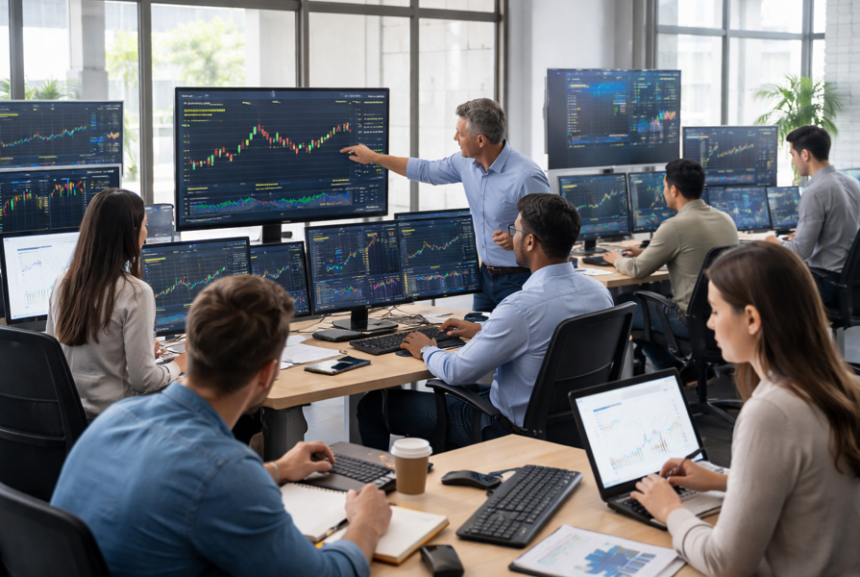

Trading in 2026 – Learn Stock, Forex & Cryptocurrency Strategies for Beginners
Master online trading with practical strategies in stocks, forex, and cryptocurrency. Learn risk management and market analysis for consistent profits.
Trading in 2026 – Unlock Profits, Strategy & Financial MasteryTrading is one of the most dynamic and lucrative fields in finance. Whether it’s stocks, forex, commodities, or cryptocurrencies, trading allows individuals and professionals to generate income, build wealth, and participate actively in the financial markets.
In today’s fast-paced world, trading is no longer restricted to stockbrokers or professionals. Anyone with access to online platforms, trading apps, and proper knowledge can participate in the markets. However, success requires understanding market fundamentals, analysis techniques, risk management, and discipline.
Trading is not gambling — it’s strategic, data-driven decision-making. While risk is inherent, proper education and preparation can significantly improve outcomes.
In this blog, we will cover:
- What is trading and its types
- Key markets for trading (stocks, forex, commodities, crypto)
- Trading strategies and technical analysis
- Risk management techniques
- Trading psychology and discipline
- Tools, platforms, and software for trading
- Career opportunities and income potential
- Real-life examples and case studies
- Future of trading in 2026
Trading involves buying and selling financial instruments with the goal of making a profit. It is different from investing, which typically involves long-term holding for appreciation.
Types of Trading- Day Trading: Buying and selling financial instruments within the same trading day.
- Swing Trading: Holding positions for several days or weeks to capture market swings.
- Position Trading: Long-term trading based on trends over months.
- Scalping: Quick trades aiming for small profits, repeated frequently.
- Stocks/Equities: Shares of companies traded on stock exchanges.
- Forex: Currency trading in global foreign exchange markets.
- Commodities: Gold, silver, oil, agricultural products.
- Cryptocurrencies: Bitcoin, Ethereum, and other digital assets.
Trading strategies are essential for systematic decision-making.
1. Technical Analysis- Charts, trends, and indicators
- Candlestick patterns, moving averages, RSI, MACD
- Volume analysis and price action
- Company earnings, financial statements
- Economic indicators, inflation, interest rates
- News events and geopolitical developments
- Automated trading using algorithms
- AI-powered trading bots
- Backtesting strategies for efficiency
Risk management is crucial for long-term profitability:
- Set Stop Loss & Take Profit: Limit losses and secure profits
- Diversification: Spread investments across multiple assets
- Position Sizing: Adjust trade size based on account capital
- Avoid Overtrading: Discipline prevents impulsive decisions
- Keep Emotions in Check: Fear and greed can destroy profits
A successful trader must control emotions and follow strategies consistently:
- Patience: Wait for the right setups
- Discipline: Stick to your plan
- Confidence: Trust your analysis
- Learning from mistakes: Continuous improvement
- Avoiding herd mentality: Trade based on research, not hype
Modern trading relies on technology and real-time data:
- Trading Platforms: Zerodha, Upstox, Robinhood, Binance
- Charting Software: TradingView, MetaTrader, NinjaTrader
- News & Alerts: Economic calendar, live news updates
- AI & Bots: Algorithmic trading for efficiency
- Warren Buffett (Stocks): Long-term investing principles with disciplined trading insights.
- George Soros (Forex): Currency trading using macroeconomic strategies.
- Crypto Traders (2020–2025): Leveraging volatility for profits in digital assets.
These examples show that knowledge, strategy, and discipline are keys to success, regardless of the market.
- Stock Trader / Equity Analyst
- Forex Trader / Currency Analyst
- Cryptocurrency Trader
- Trading Strategist
- Portfolio Manager
- Risk Management Analyst
- Financial Advisor
Income Potential (India):
- Beginner: ₹5L–₹10L/year
- Intermediate: ₹15L–₹30L/year
- Experienced / Professional Trader: ₹50L–₹1Cr+/year
- AI & Machine Learning in Trading: Automated analysis and predictive algorithms
- Decentralized Finance (DeFi): Peer-to-peer trading without intermediaries
- Global Market Access: More retail traders accessing international markets
- Blockchain Integration: Transparent and secure trading platforms
- Education & Online Learning: Trading courses and mentorship programs growing rapidly
The trading industry is evolving quickly, and those who adapt and learn continuously will thrive.

Quantum Code Chronicles: Transforming Beginners into Pro Programmers a...


Master Stock Market Trading with Technical Analysis & Risk Management